


Can You Use Vitamin B5 and Hyaluronic Acid Together?
Release time:
2025-09-02
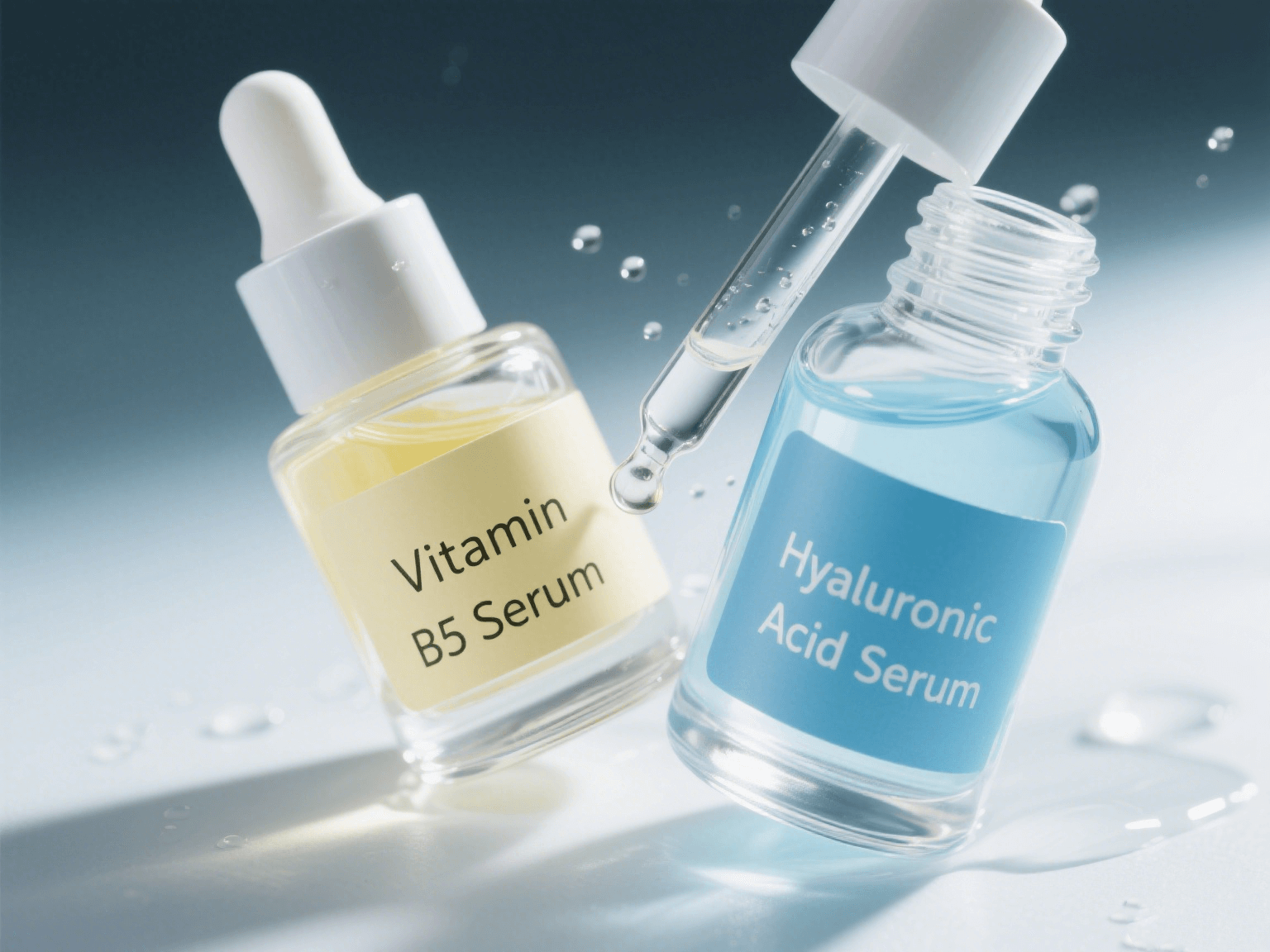
When it comes to skincare, two popular ingredients are Vitamin B5 (Panthenol) and Hyaluronic Acid (Sodium Hyaluronate). Many people ask: Can you use them together? The answer: Yes, and they work even better as a pair.
What Is Vitamin B5?
Vitamin B5, often shown as Panthenol on labels, is a hydrating and soothing ingredient. It:
Attracts and holds water.
Keeps skin soft and smooth.
Supports barrier repair.
Calms irritation.
This makes it common in serums, creams, and lotions for dry or sensitive skin.
What Is Hyaluronic Acid?
Hyaluronic Acid is a natural molecule that can bind up to 1,000 times its weight in water. In products, it’s used as Sodium Hyaluronate, which is stable and effective:
High molecular weight: Creates a hydrating layer on the surface.
Low molecular weight: Penetrates deeper for long-lasting hydration.
This layered effect explains why it’s so popular in serums, toners, and creams.
Why Use Them Together?
Combining Vitamin B5 and Hyaluronic Acid delivers:
Deep hydration from both humectants.
Barrier support — B5 repairs, HA locks in water.
Soothing care for sensitive or irritated skin.
Better absorption, maximizing benefits.
How to Use Them
You’ll often see them together in hydrating serums and creams. Or you can layer:
Apply a Hyaluronic Acid serum on damp skin.
Follow with a B5 moisturizer or serum.
Both are gentle, safe, and suitable for daily use.
Final Thoughts
Yes — Vitamin B5 and Hyaluronic Acid are safe and effective together. This duo improves hydration, barrier repair, and skin comfort, making it a smart choice for a healthy skincare routine.
At Focusfreda, we supply sodium hyaluronate from 400 Da to 3 million Da and provide formulation suggestions that combine HA with B5 to meet diverse product needs.
BLOGS

Knee osteoarthritis (KOA) is a common chronic joint disease with an increasing prevalence among older adults, severely impacting quality of life. Sodium hyaluronate (SH), as a core component of synovial fluid, is a key drug in KOA treatment. However, different molecular weights of SH exhibit significant differences in efficacy and mechanism of action, directly affecting treatment options. This article focuses on interpreting its differentiating effects to provide a reference for clinical application. [Reference Interpretation: Figure 1]

Is Hyaluronic Acid Ingredient Good for Acne? Safe Hydration for Breakout-Prone Skin
Learn whether hyaluronic acid is good for acne-prone skin, if it clogs pores, how it supports the skin barrier, and how to pair it with retinoids, niacinamide, and BHA—plus routine tips and FAQs.

Will Sodium Hyaluronate Clog Pores?
Will sodium hyaluronate clog pores? Learn why it’s usually non-comedogenic, what causes breakouts in HA products, and how acne-prone skin can use it correctly—plus why high-quality manufacturing standards matter.

Sodium Hyaluronate in Lipstick: Hydration Hero or Marketing Hype?
Hyaluronic Acid Lipstick: hydration hero or hype? Learn why water-soluble sodium hyaluronate struggles in waxy lipsticks—and how oil-dispersible HA can actually help.

Can Low Molecular Weight Sodium Hyaluronate Really Penetrate the Skin?
Can low molecular weight sodium hyaluronate penetrate the skin? This science-based guide explains how molecular weight affects skin interaction, hydration, and epidermal penetration.

What is Sodium Hyaluronate Crosspolymer?
Discover what Sodium Hyaluronate Crosspolymer is and why skincare brands are increasingly using this advanced form of hyaluronic acid. Learn how it’s made, how it compares with regular HA, its long-lasting moisturizing benefits, and how to choose a reliable manufacturer like Focusfreda for high-quality Sodium Hyaluronate Crosspolymer.